
Refuting Gnostic Blasphemies Against YHWH
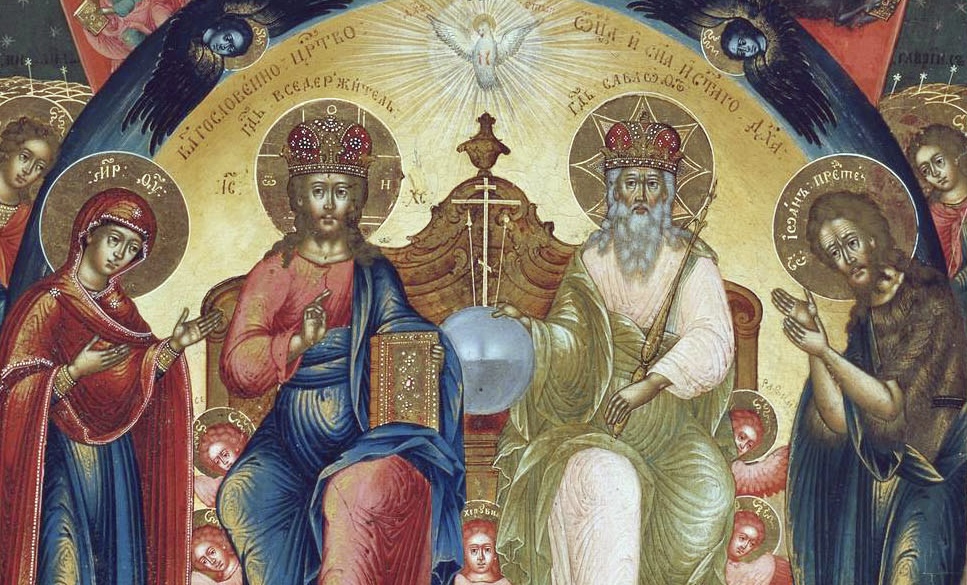
Gnosticism is an ancient heretical movement that emerged in the 1st-2nd centuries AD. It presented a radical reinterpretation of the Hebrew Scriptures, resulting in a denigration and rejection of the Biblical God, YHWH. At the heart of Gnostic belief is the idea that the physical world is inherently evil, created not by the true benevolent God, but by a lesser malevolent entity called the ‘Demiurge’. Many Gnostic sects identified this Demiurge with YHWH, the God of the Old Testament, portraying Him as a jealous and tyrannical figure who enslaved humanity in the material world. In contrast, they viewed Jesus as a divine messenger sent by the supreme, unknowable God to reveal secret knowledge (gnosis) that could free the soul from physical bondage. This dualism led the Gnostics to reject YHWH as a corrupt, nefarious being—some even equating Him with Satan—while elevating Jesus as the revealer of a higher, hidden truth.
However, the claim that YHWH is Satan rather than the Father of Jesus Christ and God of the combined Testaments is incompatible with both Scripture and the teachings of the early Church. The Bible consistently affirms that YHWH, the Creator of heaven and earth, is the same God revealed in the person of Jesus Christ. Far from being a malicious entity seeking to trap our souls in a carnal realm, YHWH is described throughout the Old Testament as a God of justice, mercy, and covenantal love (Exodus 34:6-7). The New Testament does not present Jesus as opposing YHWH, but as fulfilling His promises and carrying out His redemptive plan (Matthew 5:17). Through both scripture and history, it is easily discernible that the Gnostic portrayal of YHWH is a distortion rooted in dualistic philosophy rather than divine revelation. Proponents of Gnostic beliefs lack a fundamental knowledge of the scriptures, and rather than conducting diligent research, allow fantastical, eisegetical opinions to turn them away from the creator.
In this writeup, I will prove that YHWH is the One True God, and that his only begotten son is Jesus Christ.
So, to begin:
Without YHWH’s prophecies throughout the Old Testament, there would not have been a basis for believing in Jesus as a first-century Israelite. There were plenty of false messiahs performing wonders throughout this period—examples from scripture being Simon Magus and Elymas, while Flavius Josephus mentions others. Of course, Christ’s miracles were not only greater, but legitimate—nonetheless, those of fraudulent inferiority were still deemed divine by society. What separated Jesus in the eyes of the people is that he fulfilled the Old Testament’s messianic prophecies and understood the scriptures to a degree that nobody else did. This is because Jesus Christ, Yeshua haMashiach, is the “Angel of YHWH” (מַלְאַ֣ךְ יְהוָ֗ה) prophesied all throughout the Old Testament.
For example, compare Micah 5:2/5-6 and Isaiah 37:36-38, in which “Lord” is translated from “יְהוָ֗ה” (YHWH):
– Micah 5:2/5-6, “But you, O Bethlehem Ephrathah, who are too little to be among the clans of Judah, from you shall come forth for me one who is to be ruler in Israel, whose coming forth is from of old, from ancient days… And he shall be their peace. When the Assyrian comes into our land and treads in our palaces, then we will raise against him seven shepherds and eight princes of men; they shall shepherd the land of Assyria with the sword, and the land of Nimrod at its entrances; and he shall deliver us from the Assyrian when he comes into our land and treads within our border.”
– Isaiah 37:36-38, “And the angel of the Lord (יְהוָ֗ה) went out and struck down 185,000 in the camp of the Assyrians. And when people arose early in the morning, behold, these were all dead bodies. Then Sennacherib king of Assyria departed and returned home and lived at Nineveh. And as he was worshiping in the house of Nisroch his god, Adrammelech and Sharezer, his sons, struck him down with the sword. And after they escaped into the land of Ararat, Esarhaddon his son reigned in his place.”
Essentially, Micah 5:2/5-6 emphasizes how the coming Messiah would be a Judahite born in Bethlehem, which Christ was, and then inserts an independent clause stating that He would also be Judah’s peace when Assyria invades them—hence, “… whose coming forth is from of old, from ancient days.” Moreover, Isaiah 37:36-38 clarifies that the Angel of the Lord (יְהוָ֗ה) was the one who decimated the Assyrian army camped outside of the Kingdom of Judah. Thus, Jesus Christ, who is of ancient days and defended Judah when Assyria invaded, is the Angel of the Lord (יְהוָ֗ה) who struck down 185,000 Assyrian militants.
Also compare Exodus 14:19 and Exodus 23:20-23, where “the angel of God” leads Israel out of Egypt, to 1 Corinthians 10:1-2/4/9, where Paul identifies Christ as the one who accompanied Israel and judged them, and Jude 5, which attributes the deliverance of Israel from Egypt to Jesus:
– Exodus 14:19, “Then the angel of God, who was going before the host of Israel, moved and went behind them, and the pillar of cloud moved from before them and stood behind them.”
– Exodus 23:20-23, “Behold, I send an angel before you to guard you on the way and to bring you to the place that I have prepared.”
– 1 Corinthians 10:1-2/4/9, “For I do not want you to be unaware, brothers, that our fathers were all under the cloud, and all passed through the sea, and all were baptized into Moses in the cloud and in the sea… and all drank the same spiritual drink. For they drank from the spiritual Rock that followed them, and the Rock was Christ… We must not put Christ to the test, as some of them did and were destroyed by serpents.”
– Jude 5, “Now I want to remind you, although you once fully knew it, that Jesus, who saved a people out of the land of Egypt, afterward destroyed those who did not believe.”
Furthermore, Exodus 3:2-6/14-15 states, “And the angel of the Lord appeared to him in a flame of fire out of the midst of a bush. He looked, and behold, the bush was burning, yet it was not consumed. And Moses said, ‘I will turn aside to see this great sight, why the bush is not burned.’ When the Lord saw that he turned aside to see, God called to him out of the bush, ‘Moses, Moses!’ And he said, ‘Here I am.’ Then he said, ‘Do not come near; take your sandals off your feet, for the place on which you are standing is holy ground.’ And he said, ‘I am the God of your father, the God of Abraham, the God of Isaac, and the God of Jacob.’ And Moses hid his face, for he was afraid to look at God… God said to Moses, ‘I am who I am.’ And he said, ‘Say this to the people of Israel: I am has sent me to you.’ God also said to Moses, ‘Say this to the people of Israel: The Lord, the God of your fathers, the God of Abraham, the God of Isaac, and the God of Jacob, has sent me to you. This is my name forever, and thus I am to be remembered throughout all generations.’”
In this passage, it is revealed that the name by which YHWH was referred to was “I AM”. Within John 8, Jesus explicitly refers to himself by this name, and in doing so, proclaims that He is the God of the Old Testament, the Angel of YHWH:
– John 8:58, “Jesus said to them, ‘Truly, truly, I say to you, before Abraham was, I AM.’”
Here, Jesus directly applies “I AM” (Greek: ἐγώ εἰμι) to Himself, claiming eternal existence before Abraham. The Judeans immediately sought to stone Him (John 8:59) for this statement, recognizing it as a claim to divinity.
Accordingly, those who claim that YHWH is satan, mean to tell you that:
- Satan prophesied of, and thus provided validity to, the very being who would destroy him.
- Satan promised Israel deliverance from Egypt in Exodus 3:7-8 and Exodus 6:6, where ”Lord” is translated from “יְהוָ֔ה” (YHWH), and then sent the “angel of God”, Jesus Christ, to guide them.
- Jesus adopted the title of “I AM” from Satan.
They also mean to tell you that Jesus Christ is named after Satan, as Jesus is an Anglicization of the Greek cognate of Yeshua, which itself is the Aramaic cognate of the Hebrew Yehoshua. The ‘Yeh‘ in Yehoshua is an allusion to YAH/YHWH, and Yehoshua/Yeshua/Jesus translates to “YHWH Saves”.
Not only that, but two of Christ’s appointed Apostles, Matthew and John, are also named after YHWH: Matthew is an Anglicization of the Greek cognate of Mattithyahu, which in Hebrew, translates to “Gift of YHWH; John is an Anglicization of the Greek cognate of Yohanan, which in Hebrew, translates to “YHWH is Gracious.” Not to mention, John is the name of John the Baptist, who was not only Christ’s cousin, but the one who baptized him. John the Baptist was even referred to by Christ as the greatest man ever born from a woman: “Truly, I say to you, among those born of women there has arisen no one greater than John the Baptist.” (Matthew 11:11)
Now, if “YHWH isn’t the God of Jesus”, why is Christ worshipped in Heaven with praises of “HalleluYAH” (meaning “Praise be to YHWH”)?
- Revelation 19:1, “After this I heard what seemed to be the loud voice of a great multitude in heaven, crying out, ‘HalleluYAH! Salvation and glory and power belong to our God.’”
- Revelation 19:3, “Once more they cried out, ‘HalleluYAH! The smoke from her goes up forever and ever.’”
- Revelation 19:4, “And the twenty-four elders and the four living creatures fell down and worshiped God who was seated on the throne, saying, ‘Amen. HalleluYAH!’”
- Revelation 19:6, “Then I heard what seemed to be the voice of a great multitude, like the roar of many waters and like the sound of mighty peals of thunder, crying out, ‘HalleluYAH! For the Lord our God the Almighty reigns.’”
Next, why does Christ’s ancestor, King David, who was promised an everlasting throne through Christ, refer to his God as YAH (יָ֥הּ/𐤉𐤄), the shortened form of YHWH (יְהוָ֔ה/𐤉𐤄𐤅𐤄)?
- Psalm 68:4, “Sing to God, sing praises to His name; Extol Him who rides on the clouds, By His name YAH (יָ֥הּ/𐤉𐤄), And rejoice before Him.”
- Psalm 118:5, “I called on YAH (יָ֥הּ/𐤉𐤄) in distress; YAH (יָ֥הּ/𐤉𐤄) answered me and set me in a broad place.”
- Psalm 150:6, “Let everything that has breath praise YAH (יָ֥הּ/𐤉𐤄). Praise YAH (יָ֥הּ/𐤉𐤄)!”
– Psalm 68:18, “You have ascended on high, You have led captivity captive; You have received gifts among men, Even from the rebellious, That the LORD (יָ֥הּ/𐤉𐤄) God might dwell there.”
– Psalm 77:11, “I will remember the works of the LORD (יָ֥הּ/𐤉𐤄); Surely I will remember Your wonders of old.”
– Psalm 89:8, “O LORD (יָ֥הּ/𐤉𐤄) God of hosts, Who is mighty like You, O LORD (יָ֥הּ/𐤉𐤄)? Your faithfulness also surrounds You.”
– Psalm 94:7/12, “Yet they say, ‘The LORD (יָ֥הּ/𐤉𐤄) does not see, Nor does the God of Jacob understand.’”
– Psalm 102:18, “This will be written for the generation to come, That a people yet to be created may praise the LORD (יָ֥הּ/𐤉𐤄).”
– Psalm 104:35, “Let the sinners be consumed from the earth, And let the wicked be no more. Bless the LORD (יָ֥הּ/𐤉𐤄), O my soul! Praise the LORD (יָ֥הּ/𐤉𐤄)!”
– Psalm 105:45, “That they might observe His statutes And keep His laws. Praise the LORD (יָ֥הּ/𐤉𐤄)!”
– Psalm 106:48, “Blessed be the LORD (יָ֥הּ/𐤉𐤄), the God of Israel, From everlasting to everlasting! And let all the people say, ‘Amen!’ Praise the LORD (יָ֥הּ/𐤉𐤄)!”
– Psalm 111:1, “Praise the LORD (יָ֥הּ/𐤉𐤄)! I will praise the LORD (יָ֥הּ/𐤉𐤄) with my whole heart, In the assembly of the upright and in the congregation.”
– Psalm 112:1, “Praise the LORD (יָ֥הּ/𐤉𐤄)! Blessed is the man who fears the LORD (יָ֥הּ/𐤉𐤄), Who delights greatly in His commandments.”
– Psalm 113:1/9, “Praise the LORD (יָ֥הּ/𐤉𐤄)! Praise, O servants of the LORD (יָ֥הּ/𐤉𐤄), Praise the name of the LORD (יָ֥הּ/𐤉𐤄)! He makes the barren woman abide in the house As a joyful mother of children. Praise the LORD (יָ֥הּ/𐤉𐤄)!”
– Psalm 115:17-18, “The dead do not praise the LORD (יָ֥הּ/𐤉𐤄), Nor any who go down into silence. But we will bless the LORD (יָ֥הּ/𐤉𐤄) From this time forth and forevermore. Praise the LORD (יָ֥הּ/𐤉𐤄)!”
– Psalm 116:19, “In the courts of the LORD’s house, In the midst of you, O Jerusalem. Praise the LORD (יָ֥הּ/𐤉𐤄)!”
– Psalm 117:2, “For His merciful kindness is great toward us, And the truth of the LORD (יָ֥הּ/𐤉𐤄) endures forever. Praise the LORD (יָ֥הּ/𐤉𐤄)!”
– Psalm 118:15/17, “The voice of rejoicing and salvation Is in the tents of the righteous; The right hand of the LORD (יָ֥הּ/𐤉𐤄) does valiantly. I shall not die, but live, And declare the works of the LORD (יָ֥הּ/𐤉𐤄).”
Let’s also not forget that Christ said, “For if you believed Moses, you would believe me; for he wrote about me” (John 5:46), and how Moses himself referred to YAH (יָ֥הּ/𐤉𐤄) as his God in Exodus 15:2 and Exodus 17:15-16:
– Exodus 15:2, “The Lord (יָ֥הּ/𐤉𐤄) is my strength and my song, and he has become my salvation; this is my God, and I will praise him, my father’s God, and I will exalt him.”
– Exodus 17:15-16, “And Moses built an altar and called the name of it, The Lord (יְהוָ֔ה/𐤉𐤄𐤅𐤄) Is My Banner, saying, ‘A hand upon the throne of the Lord (יָ֥הּ/𐤉𐤄)! The Lord (יְהוָ֔ה/𐤉𐤄𐤅𐤄) will have war with Amalek from generation to generation.’”
It is abundantly clear that the “Old Testament God” is YHWH, and both Christ and his followers appealed to the Old Testament on numerous occasions, even acknowledgeding that they were quoting ancient scriptures. Examples include:
– Matthew 4:4, “It is written, ‘Man shall not live by bread alone, but by every word that comes from the mouth of God.’” (Deuteronomy 8:3)
– Matthew 4:7, “Again it is written, ‘You shall not put the Lord your God to the test.’” (Deuteronomy 6:16)
– Matthew 4:10, “Be gone, Satan! For it is written, ‘You shall worship the Lord your God and him only shall you serve.’” (Deuteronomy 6:13)
– Matthew 5:17, “Do not think that I have come to abolish the Law or the Prophets; I have not come to abolish them but to fulfill them.” (Refers to the entirety of the Old Testament Law and Prophets)
– Matthew 12:39-41, “An evil and adulterous generation seeks for a sign, but no sign will be given to it except the sign of the prophet Jonah.” (Jonah 1:17)
– Matthew 21:42, “Have you never read in the Scriptures: ‘The stone that the builders rejected has become the cornerstone; this was the Lord’s doing, and it is marvelous in our eyes’?” (Psalm 118:22-23)
– Matthew 22:29-32, “You are wrong, because you know neither the Scriptures nor the power of God.” (Exodus 3:6)
– Luke 4:16-21, “The Spirit of the Lord is upon me, because he has anointed me to proclaim good news to the poor.” (Isaiah 61:1-2)
– Luke 24:25-27, “O foolish ones, and slow of heart to believe all that the prophets have spoken!” (Refers to the Old Testament Prophets’ writings)
– Luke 24:44-45, “These are my words that I spoke to you while I was still with you, that everything written about me in the Law of Moses and the Prophets and the Psalms must be fulfilled.” (Refers to the Law of Moses, the Old Testament Prophets, and the Psalms)
– John 5:39-47, “You search the Scriptures because you think that in them you have eternal life; and it is they that bear witness about me.” (Refers to the Old Testament Scriptures)
– Acts 2:14-36, “Men of Judea and all who dwell in Jerusalem, let this be known to you, and give ear to my words.” (Joel 2:28-32)
– Acts 3:18-26, “But what God foretold by the mouth of all the prophets, that his Christ would suffer, he thus fulfilled.” (Deuteronomy 18:15)
– Acts 8:30-35, “Do you understand what you are reading?” (Isaiah 53:7-8)
– Acts 13:27-41, “For those who live in Jerusalem and their rulers, because they did not recognize him nor understand the utterances of the prophets.” (Psalm 2:7)
– Acts 17:2-3, “And Paul went in, as was his custom, and on three Sabbath days he reasoned with them from the Scriptures.” (Refers to the Old Testament Scriptures)
– Acts 18:28, “For he powerfully refuted the Jews in public, showing by the Scriptures that the Christ was Jesus.” (Refers to the Old Testament Scriptures)
– Romans 1:2-4, “Which he promised beforehand through his prophets in the holy Scriptures.” (Refers to the Old Testament Prophets’ writings)
– Romans 3:21-22, “But now the righteousness of God has been manifested apart from the law.” (Refers to the Old Testament Law; Torah)
– Romans 10:11-21, “For the Scripture says, ‘Everyone who believes in him will not be put to shame.’” (Isaiah 28:16)
– Hebrews 1:5-13, “For to which of the angels did God ever say, ‘You are my Son, today I have begotten you’?” (Psalm 2:7)
– Hebrews 2:6-8, “It has been testified somewhere, ‘What is man, that you are mindful of him, or the son of man, that you care for him?’” (Psalm 8:4-6)
– Hebrews 5:5-6, “So also Christ did not exalt himself to be made a high priest.” (Psalm 110:4)
– Hebrews 10:5-7, “Consequently, when Christ came into the world, he said, ‘Sacrifices and offerings you have not desired.’” (Psalm 40:6-8)
– 1 Peter 1:10-12, “Concerning this salvation, the prophets who prophesied about the grace that was to be yours searched and inquired carefully.” (Refers to the Old Testament Prophets’ writings)
Furthermore, in Mark 12:29-30 (paralleled in Matthew 22:37 and Luke 10:27), Jesus quotes the Shema from Deuteronomy 6:4-5, stating, “The most important is, ‘Hear, O Israel: The Lord our God, the Lord is one. And you shall love the Lord your God with all your heart and with all your soul and with all your mind and with all your strength.’” In this passage, “the Lord our God” is translated from “יְהוָ֧ה אֱלֹהֶ֛יךָ” (YHWH ELOHEKA).
To add, in Matthew 4:10 and Luke 4:8, Christ is tempted by Satan and responds, “Be gone, Satan! For it is written, ‘You shall worship the Lord your God and him only shall you serve.’” This is a direct quote from Deuteronomy 6:13, where “the Lord your God” is again translated from “יְהוָ֧ה אֱלֹהֶ֛יךָ” (YHWH ELOHEKA): “Fear the LORD your God, serve him only and take your oaths in his name.”
Thus, the assertion that YHWH is Satan requires Christ to be oblivious to the point that he would appeal to the Old Testament, which regards YHWH’s Covenant with Israel, and even cite passages explicitly stating that YHWH is God—despite the assertion that YHWH is His enemy.
Christ’s acknowledgment that YHWH is God—His Father in heaven—is compounded by passages such as:
- John 8:54, in which Christ tells the Pharisees, “It is my Father who glorifies me, of whom you say, ‘He is our God.’” Of course, the Pharisees claimed to worship the Old Testament God, YHWH, and here, Christ explicitly states that YHWH is his Father.
- Matthew 4:4, in which Christ tells his followers, “It is written, Man shall not live by bread alone, but by every word that comes from the mouth of God.” This is a direct quote from Deuteronomy 8:2-3, which explicitly refers to YHWH’s providence: “And you shall remember the whole way that the LORD (יְהוָ֔ה/𐤉𐤄𐤅𐤄) your God has led you these forty years in the wilderness, that he might humble you, testing you to know what was in your heart, whether you would keep his commandments or not. And he humbled you and let you hunger and fed you with manna, which you did not know, nor did your fathers know, that he might make you know that man does not live by bread alone, but man lives by every word that comes from the mouth of the LORD (יְהוָ֔ה/𐤉𐤄𐤅𐤄).”
- Isaiah 42:1, in which YHWH tells Isaiah, “Behold my servant, whom I uphold, my chosen, in whom my soul delights; I have put my Spirit upon him.” This passage is applied to Jesus in Matthew 12:15-18, and proves that the Spirit of YHWH lives in Christ: “Jesus, aware of this, withdrew from there. And many followed him, and he healed them all and ordered them not to make him known. This was to fulfill what was spoken by the prophet Isaiah: ‘Behold, my servant whom I have chosen, my beloved with whom my soul is well pleased. I will put my Spirit upon him, and he will proclaim justice to the Gentiles.’”
- Psalm 110:1, in which David says of YHWH, “The LORD (יְהוָ֔ה/𐤉𐤄𐤅𐤄) says to my Lord, ‘Sit at my right hand.’” This is applied to Jesus in Matthew 22:43-44, “He said to them, ‘How is it then that David, in the Spirit, calls him (Jesus) Lord’, saying, ‘The Lord (YHWH) said to my Lord (Jesus), Sit at my right hand, until I put your enemies under your feet’”.
It is abundantly clear to anybody who has studied the Bible, that YHWH is God, and Jesus is His earthly incarnation. Passages proving this include:
– John 1:1/14, “In the beginning was the Word, and the Word was with God, and the Word was God… And the Word became flesh and dwelt among us.”
– Philippians 2:5-8, “In your relationships with one another, have the same mindset as Christ Jesus: Who, being in very nature God, did not consider equality with God something to be used to his own advantage; rather, he made himself nothing by taking the very nature of a servant, being made in human likeness. And being found in appearance as a man, he humbled himself by becoming obedient to death—even death on a cross!“
– John 10:30-33, “I and the Father are one.” (The Jews tried to stone Him for blasphemy, recognizing this as a claim to deity)
– John 8:58, “Truly, truly, I say to you, before Abraham was, I AM.” (Referring to YHWH’s name in Exodus 3:14, “I AM who I AM”)
– Colossians 1:15-20, “The Son is the image of the invisible God, the firstborn over all creation. For in him all things were created: things in heaven and on earth, visible and invisible, whether thrones or powers or rulers or authorities; all things have been created through him and for him. He is before all things, and in him all things hold together. And he is the head of the body, the church; he is the beginning and the firstborn from among the dead, so that in everything he might have the supremacy. For God was pleased to have all his fullness dwell in him, and through him to reconcile to himself all things, whether things on earth or things in heaven, by making peace through his blood, shed on the cross.”
– John 14:9-11, “Whoever has seen me has seen the Father.”
– John 20:28, “Thomas answered him, ‘My Lord and my God!’” (Jesus did not correct him)
– Titus 2:13, “… waiting for our blessed hope, the appearing of the glory of our great God and Savior Jesus Christ.”
– Colossians 2:9, “For in Him (Jesus) the whole fullness of deity dwells bodily.”
– Isaiah 9:6, “For to us a child is born… and His name shall be called Wonderful Counselor, Mighty God, Everlasting Father, Prince of Peace.”
– Matthew 1:23, “Behold, the virgin shall conceive and bear a son, and they shall call his name Immanuel” (which means “God is with us”).
– Revelation 22:13, “I am the Alpha and the Omega, the first and the last, the beginning and the end.” (An allusion to YHWH’s statement in Isaiah 44:6, “I am the first and I am the last; besides me there is no God”)
– Mark 2:5-7 (Jesus forgives sins), “Why does this man speak like that? He is blaspheming! Who can forgive sins but God alone?”
– Hebrews 1:8, “But about the Son he says, ‘Your throne, O God, will last for ever and ever; a scepter of justice will be the scepter of your kingdom.’”
– Zechariah 12:10 (YHWH speaks), “They will look on Me, the one they have pierced.” (Fulfilled by Christ in John 19:34-37, “Instead, one of the soldiers pierced Jesus’ side with a spear, bringing a sudden flow of blood and water. The man who saw it has given testimony, and his testimony is true. He knows that he tells the truth, and he testifies so that you also may believe. These things happened so that the scripture would be fulfilled: ‘Not one of his bones will be broken,’ and, as another scripture says, ‘They will look on the one they have pierced.’”
– Isaiah 40:3, “Prepare the way of the Lord (translated from YHWH).” [Applied to Jesus in John 1:23, “He (John the Baptist) said, ‘I am the voice of one crying out in the wilderness, ‘Make straight the way of the Lord,’ as the prophet Isaiah said.’”]
Now, in regard to the claim that “the Old Testament God is evil and could not be the father of Jesus”:
In numerous instances throughout scripture, YHWH destroys nations and leaves them in ruin—not as an evil, impulsive action, but because he persistently warned them to repent and they chose not to hearken. YHWH does not want to destroy what He created, but when iniquity and disobedience becomes rampant and degenerates a once beautiful creation, He must intervene. YHWH only allowed the most wicked of nations to be destroyed. Never did He allow a righteous, just, and obedient nation to perish.
When YHWH killed the firstborns of Egypt, or commanded Israel to kill the Canaanites and Midianites, He was punishing satanic nations that relished in 1) committing idolatry and worshipping demons, 2) performing witchcraft, 3) performing child sacrifice (in the name of demons such as Moloch), 4) waging unjustifiable wars across the known world, 5) carrying out the decree to drown all first-born Israelites, 6) oppressing and enslaving the Israelites, 7) rebelling against the One True God and disregarding the plagues he sent upon them, 8) normalizing and celebrating adultery, 9) having ritualistic orgies, and most relevantly, 10) influencing the Israelites to partake in these very sins.
If you believe YHWH is evil for destroying such a degenerate people, it is likely because you are equally as sadistic and depraved as them, or do not believe in divine retribution and justice. Plus, are you willing to condemn Christ for carrying out even greater judgements?
In Revelation 19:11-21, Christ is described as a warrior who slaughters his enemies: “I saw heaven standing open and there before me was a white horse, whose rider is called Faithful and True. With justice he judges and wages war… He is clothed in a robe dipped in blood, and the name by which he is called is The Word of God… Out of his mouth comes a sharp sword with which to strike down the nations. He will rule them with an iron scepter. He treads the winepress (an illusion to the blood of his enemies) of the fury of the wrath of God Almighty… The rest were killed with the sword coming out of the mouth of the rider on the horse.”
In Revelation 2:22-23, Jesus declares punishment upon idolators: “So I will cast her on a bed of suffering, and I will make those who commit adultery with her suffer intensely, unless they repent of her ways. I will strike her children dead. Then all the churches will know that I am he who searches hearts and minds, and I will repay each of you according to your deeds.”
In Matthew 22:1-14, Christ gives the Parable of the Wedding Banquet, in which those who were invited and rejected the invitation are decimated: “The king was enraged. He sent his army and destroyed those murderers and burned their city.” This parable was prophetic of the Desolation of Jerusalem in 70 AD, roughly 40 years after the Judeans had Christ crucified. This is prophesied more explicitly in Luke 21:20-24, “When you see Jerusalem being surrounded by armies, you will know that its desolation is near… There will be great distress in the land and wrath against this people. They will fall by the sword and will be taken as prisoners to all the nations… Jerusalem will be trampled on by the Gentiles until the times of the Gentiles are fulfilled.”
In Matthew 13:41-42, Christ gives the Parable of the Weeds, in which the wicked will be gathered and thrown into a blazing furnace: “The Son of Man will send out his angels, and they will weed out of his kingdom everything that causes sin and all who do evil. They will throw them into the blazing furnace, where there will be weeping and gnashing of teeth.”
In Luke 19:27, Christ gives the Parable of Ten Minas, and indirectly speaks of those who reject him: “But those enemies of mine who did not want me to be king over them—bring them here and kill them in front of me.”
There are others which compound onto this, but the point is clear: Destruction of the Wicked is Biblical, and Christ Himself partakes in the punishment of these reprobates. In no way is the castigation of Old Testament nations by YHWH in opposition to the values taught and expressed by Jesus Christ—rather the opposite.
In conclusion, Gnostic heresies against YHWH are utterly baseless and rooted in unsubstantiated opinions that are blatantly refuted throughout the Bible. YHWH is the One True Everlasting God, and His Only Begotten Son, Jesus Christ, makes this evident.